Posted on

Bathing

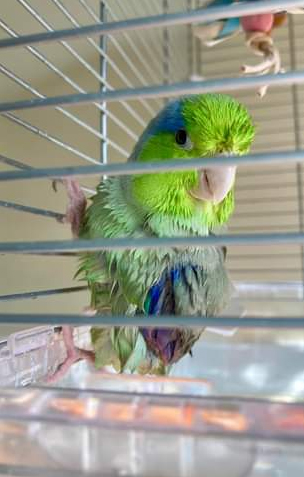
Bathing is important for parrotlets to maintain their plumage. This should be encouraged early in the day when temperatures are expected to be reasonably warm.

Many parrotlets like to take a dip in their water bowl, so we use these to provide water. The act of changing the water can often be a prompt to bathe.

CAUTION: don’t provide only self-filling tube water feeders as your new parrotlet may completely fail to drink from one of these (having never seen one before).

Not all parrotlets will bathe in their water dish. If not, we recommend a lukewarm water misting. Direct the mist from a new, clean spray bottle over your parrotlet, so mist falls from above.

Posted on

Wild Foods

We have probably all thought to ourselves: “What new treats are out there to offer my bird?” Well, if you are seeking inspiration for greater VARIETY, then look no further than the wild!

Wild foods are a valuable addition to your parrotlet’s diet because they are:

  • an excellent source of micro nutrients
  • an enriching source of activity to devour
  • a source of that all-important VARIETY (to answer the earlier question!)
  • completely FREE to acquire

With a little research and exploration of your local area, wild foods will be found in abundance. They may be collected from any land you are free to enter. Simply looking around creeks, parks or your own yard can yield a harvest.

To start you on your wold foods journey, here are some ideal Australian wild foods to look for. To learn more, simply click the links, then click on the photos to view larger images.

·         Milk Thistle (Sonchus oleraceus L.)

·         Green Amaranth (Amaranthus Viridis)

·         Curled Dock (Rumex Crispus)

·         Dandelions (Taraxacum Officinale)

·         Chick Weed (Stellaria Media)

·         Johnson’s Grass (Sorghum halepense (L.) Pers.)

·         Wild Panicum (Panicum Decompositum)

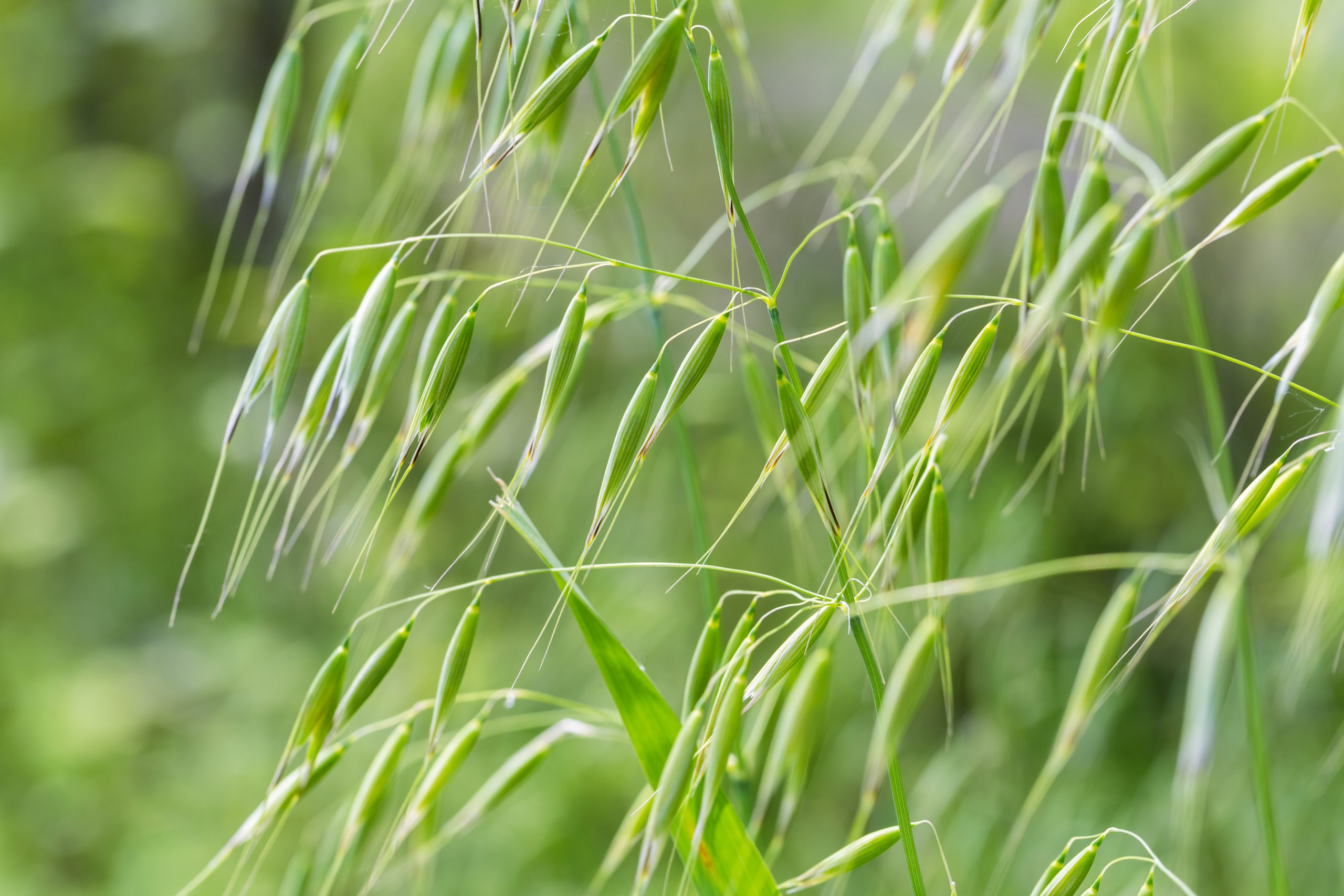
·         Wild Oats (Avena Fatua)

·         Rapeseed (Brassica napus)

·         Canary grass (Phalaris Canariensis)

·         Crowsfoot grass (Eleusine indica)

·         Whisker grass (Cyperus gracilis)

·         White Foxtail (Pennisetum Villosum)

·         Blackberry Nightshades (Solanum nigrum L.)

·         Cobbler’s Pegs (Bidens pilosa)

Whilst finding wild foods is both of great benefit to your bird and a good way to spend time in the great outdoors, there are a couple of challenges with collecting and feeding wild foods. These are: the potential threat of poisoning from herbicides and the problem of seasonality.

It’s important to note that the harvest source must be an area known NOT to have been sprayed with herbicides (i.e. weed killers). It may not be clear initially as if the area was sprayed with a herbicide recently, the grass may look healthy, however the herbicide may not have taken effect yet.

The thought may occur to you that these wild foods are all seasonal. Don’t despair! Simply grab your bag and harvest plenty to be frozen for later use. Up to around three months in the freezer is fine. Whilst you are at it, any ‘bonus’ insects will be killed by the freezing process and therefore unable to invade your home!

Coming back to the herbicide issue: A way of countering the risk of undetected herbicides is to wait a few days after freezing the wild food, then observe the grass (where you harvested). Make sure it is not showing any signs of die-off from herbicide exposure. Once this is confirmed, THEN feed the wild food.

We hope you enjoy getting out and learning about and identifying wild foods for your parrotlet. Special thanks goes to Martin Thorn for his wonderful depth of knowledge in contributing the list of wild foods. All of the links above are courtesy of local council and government authorities.

Posted on

IMPORTANT Toy Safety

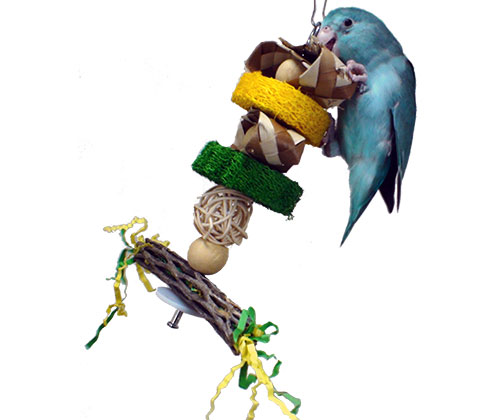
All companion parrotlets benefit greatly from the enrichment that toys bring. It’s not always easy however to find safe, appropriately sized and affordable parrotlet toys. In fact, it has taken considerable research, in consultation with avian veterinarians and parrotlet owners to find solutions. As a result, Aussie Parrotlets offers only the safest toys for your parrotlet.

The key safety principles that toys offered by Aussie Parrotlets uphold are:

No cotton

Cotton fibre is known to have been ingested by birds chewing on cotton-based toys. Unfortunately, this cotton fibre can accumulate in your parrotlet’s crop over time, eventually leading to a fatal obstruction. Instead we sell toys made with sisal or rattan fibre as this is a significantly safer alternative.

No “Birdie Huts”

Birdie huts are a tempting addition to your parrotlet’s cage; however, these can induce nesting behaviours that may lead to fatal egg-binding in females and aggression in male parrotlets.

No concrete or sandpaper perches

Aussie Parrotlets only recommend and sell perches that are comfortable and appropriately sized for your parrotlet. We do not sell concrete perches as these are too firm for bird’s feet. We do not sell sandpaper perches as these can cause foot sores which lead to infection.

No inappropriately large toys

Not only are all toys on this site specified for optimal safety, they are of course all appropriately sized for your parrotlet… After all, your parrotlet is what Aussie Parrotlets is all about!

No toxic Zinc plated steel

Avian Veterinarians have known for decades of the dangers of zinc toxicosis in birds. The problem stems in part from the fact that most of the steel used in bird toys is zinc-plated (galvanised) steel. Similar issues exist with aviary mesh too. Considering this, Aussie Parrotlets sells only toys containing higher quality safe nickel-plated (stainless) steel instead.

No unnecessary waste

Better still, we support the sustainable use of resources as the steel parts in the toys we sell are reusable rather than disposable. Simply order a refill kit for selected toys to reuse the stainless-steel part. Alternatively, the stainless steel mounting prongs may be re-used as fruit serving sticks.

A note on getting the best from your parrotlet’s toys

Now that we have the right toys… It’s important to get the most out of them. The purpose of toys is to promote engagement and avoid boredom. To achieve this end, the best tip is to rotate a different toy(s) into the cage weekly.

Whilst changing toys over, be sure to check your parrotlet’s toys to ensure they are still in good condition. Be sure to discard and replace the toys your parrotlet has destroyed (as he/she should!), or if any aspect of the toy has become unsafe.

OK, so now that’s all clear, why not check out the toys category